
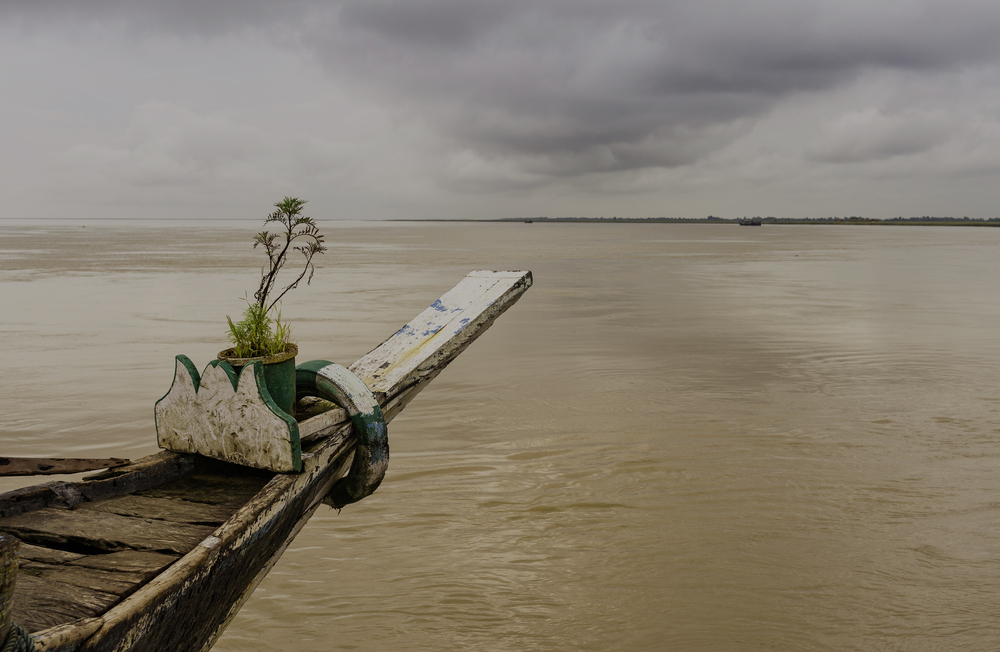
🌿 A Journey Begins on the Brahmaputra River
The journey to Majuli doesn’t begin when you arrive—it begins when you step onto a ferry.
As the boat leaves the shores of Nimatighat, the vast expanse of the Brahmaputra unfolds like an ocean. The horizon blurs into sky, and time seems to slow down.
This is not just a crossing.
It is a quiet transition—from the modern world into something far more timeless.
🌏 What Makes Majuli So Special?
Majuli is the world’s largest inhabited river island, but its true significance lies beyond geography.
It is widely regarded as the cultural capital of Assam, a place where:
- Spirituality shapes daily life
- Art is practiced as devotion
- Traditions are not preserved in museums—but lived
🧘 Understanding Satras – The Living Monasteries of Majuli
To understand Majuli, you must understand its Satras.
🏛️ What is a Satra?
A Satra is a unique Assamese institution—part monastery, part cultural school, part community center.
Founded in the 15th–16th century by the saint Srimanta Sankardev, Satras were created to spread Neo-Vaishnavism, a form of devotion focused on simplicity, equality, and art as a medium of spirituality.
📜 Structure of a Satra
A typical Satra is built around:
- A central prayer hall (Namghar)
- Residential quarters for monks (Bhakats)
- Open courtyards for performances and rituals
These are not isolated religious spaces—they are living ecosystems of culture.
🧑🎓 Life Inside a Satra
Young boys often join Satras early in life.
They are trained in:
- Scriptures and philosophy
- Music, dance, and drama
- Discipline, humility, and community living
Over time, they become monks, dedicating their lives to preserving centuries-old traditions.
🎭 Satras as Cultural Universities
Satras are the birthplace of:
- Sattriya dance (one of India’s classical dance forms)
- Traditional theatre called Bhaona
- Mask-making, music, and manuscript art
👉 In many ways, Satras function as cultural universities, where art and spirituality are inseparable.
🏛️ Important Satras to Visit
- Kamalabari Satra – Known for dance and cultural training
- Auniati Satra – Rich in artifacts and royal patronage
Each Satra offers a different window into Majuli’s soul.
🌾 Life on the Island – In Rhythm with Nature
Majuli is shaped by the river—and so are its people.
🏡 Everyday Life:
- Homes are built on stilts to withstand floods
- Farming and fishing sustain families
- Time is measured not by clocks, but by seasons
The landscape is vast and open:
- Endless rice fields
- Grazing cattle
- Quiet wetlands reflecting the sky
👉 It is a place where simplicity becomes luxury.
🧑🌾 The Living Traditions of the Mising Tribe
Among Majuli’s many communities, the Mising tribe stands out for its deep connection with nature.
🌿 Their Way of Life:
- Elevated bamboo houses called Chang Ghar
- River-based agriculture and fishing
- Strong community bonds
🎉 Cultural Identity:
- Festivals like Ali-Aye-Ligang
- Intricate handwoven textiles
- Unique food traditions
👉 Visiting a Mising village offers a rare glimpse into a sustainable, river-based lifestyle.
🚣 The Ferry Ride – A Journey You’ll Never Forget
The ferry from Nimatighat to Kamalabari is often described as the highlight of the trip.
✨ What Makes It Special:
- The sheer scale of the Brahmaputra River
- Silence broken only by water and wind
- Golden light during sunrise and sunset
👉 For many travelers, this journey becomes a moment of reflection—almost spiritual in itself.
🚤 Life Connected by Water
Majuli has no bridges connecting it to the mainland.
- Ferries are the lifeline
- Locals commute daily for work, education, and trade
- Vehicles, goods, and people share the same boats
👉 This creates a rhythm of life that is deeply tied to the river.
🌤️ When to Visit Majuli
- October to April – Best weather, clear skies
- Winter months offer festivals and cultural performances
- Monsoon season (June–September) brings heavy rains and floods
🚖 Experience Majuli with Eastern Safari
For international travelers, navigating Majuli can be challenging—but incredibly rewarding with the right guidance.
✨ What We Offer:
- Seamless transfers from Guwahati or Jorhat
- Ferry planning and coordination
- Guided Satra visits with cultural insights
- Village experiences with local communities
👉 We don’t just plan trips—we create meaningful cultural journeys.
🏁 Final Reflection – More Than a Destination
Majuli is not a place you rush through.
It invites you to slow down.
To listen.
To observe.
Here, culture is not performed—it is lived.
And the river doesn’t just flow—it shapes everything.
👉 For those seeking something deeper than sightseeing, Majuli offers a rare gift: a connection to a way of life that still honors time, nature, and tradition.